Elegance Without Apology: Reimagining Destination Celebrations for an Eco-Conscious Era
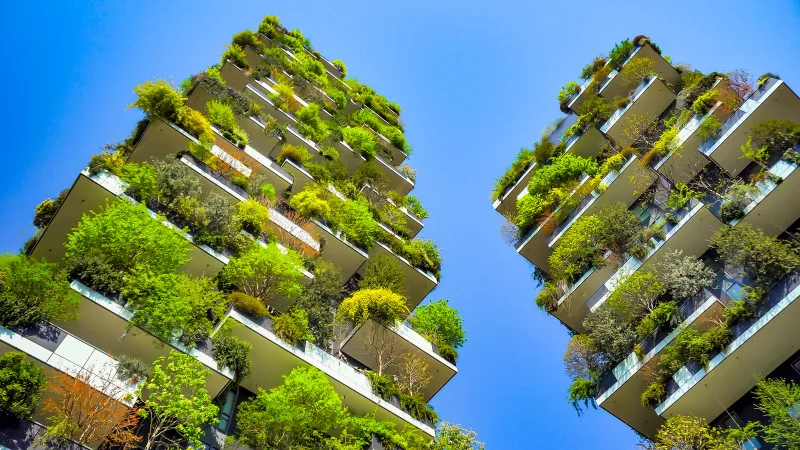
Photo: sustainable luxury outdoor wedding reception wildflowers natural setting, via www.housedigest.com
For years, the conversation around sustainable event planning was framed as a trade-off. Couples were told, implicitly or explicitly, that choosing environmental responsibility meant accepting a diminished aesthetic—fewer flowers, simpler menus, less extravagance. That framing was always a false choice, and the most forward-thinking destination event planners in the country have spent the better part of a decade proving it.
The truth is considerably more interesting: when sustainability is approached as a design constraint rather than a concession, it frequently produces more original, more beautiful, and more deeply personal celebrations than conventional planning ever could. The couples and hosts who have embraced this shift are not sacrificing luxury. They are redefining it.
Why This Conversation Has Become Unavoidable
The destination wedding and celebration market in the United States has grown substantially over the past decade, and with that growth has come a corresponding awareness of its environmental footprint. Hundreds of guests traveling by air, floral arrangements flown in from overseas, single-use décor elements discarded after a single evening—the cumulative impact of a large-scale destination event is not trivial, and increasingly, neither is the awareness of it among the clients who commission them.
This is not a fringe concern. A 2023 survey by The Knot found that more than half of engaged couples in the US identified sustainability as a meaningful consideration in their wedding planning process. Among couples in the higher spending brackets—those most likely to commission destination events—that figure was even more pronounced. These are not clients who wish to compromise on beauty or experience. They are clients who wish to feel proud of their choices in ways that extend beyond the aesthetic.
The question for planners, then, is not whether to engage with sustainability, but how to do so with the same level of craft and intentionality they bring to every other element of a celebration.
Locally Sourced Florals: The Case for Regional Beauty
Perhaps no single element of destination event design has undergone a more compelling transformation in the sustainability conversation than florals. The traditional model—ordering specific blooms regardless of season or origin, often sourced from commercial farms in South America or the Netherlands—is giving way to something far more interesting: a hyper-local, seasonally responsive approach that produces arrangements of extraordinary character.
Working exclusively with American regional flower farms and foragers, the most innovative floral designers are creating installations that could not exist anywhere else at any other time of year. A celebration in coastal Maine in late September becomes an opportunity for arrangements of dahlias, wild grasses, and bittersweet vine that are not merely sustainable—they are irreplaceable. A destination event in the Texas Hill Country in spring yields wildflower compositions that no international floral market could replicate.
The environmental benefit is genuine: locally sourced florals eliminate the carbon cost of long-haul refrigerated shipping and reduce the use of pesticides common in large-scale commercial flower farming. The aesthetic benefit is equally real. These arrangements carry the specificity of place in a way that imported blooms, however beautiful, simply cannot.
Carbon-Neutral Transportation: A Solvable Problem
Guest transportation represents one of the largest contributors to a destination event's carbon footprint, and it is also, increasingly, one of the most manageable. The options available to planners and clients today are meaningfully different from those of even five years ago.
Carbon offset programs have matured considerably, and while they remain an imperfect solution, they offer a practical mechanism for addressing the emissions associated with guest air travel when alternatives are not feasible. More compelling, however, are the structural planning decisions that reduce transportation impact at the source.
Concentrating guest accommodations at a single property or within walkable proximity to the event venue eliminates the need for repeated shuttle runs. Chartering a single high-efficiency coach to transport guests from a regional airport rather than encouraging individual car rentals can reduce per-person transportation emissions substantially. For celebrations within driving distance of major metropolitan areas, coordinated rail travel—Amtrak routes serve a surprising number of scenic destination markets in the US—offers both a lower-emission option and an unexpectedly elegant guest experience.
None of these choices require guests to sacrifice comfort. Many of them actively enhance it.
Zero-Waste Catering: Sophistication Without Excess
The zero-waste catering movement has arrived in the fine dining world, and its influence on high-end event catering is increasingly apparent. The principles are straightforward: minimize single-use materials, source ingredients with attention to their full supply chain, design menus around what is abundant and seasonal rather than what is conventionally expected, and plan portion quantities with precision to reduce food waste.
In practice, this translates to celebrations where the catering itself becomes a storytelling element. A dinner menu built around ingredients sourced from farms within fifty miles of the venue is not a limitation—it is a narrative. It connects guests to the place they have traveled to celebrate, and it supports local agricultural communities in ways that feel genuinely meaningful rather than performative.
Rentable servingware, compostable materials where disposables are necessary, and partnerships with local food recovery organizations to redirect surplus food from the event are all now standard offerings among the finest catering partners in the destination event space. These are not compromises. They are refinements.
The Luxury of Intentionality
There is a broader argument to be made here, and it is one that Belle Destination Events finds both compelling and central to our philosophy: in the current cultural moment, intentionality is luxury.
The clients who commission the most extraordinary celebrations are not simply purchasing spectacle. They are investing in meaning—in events that reflect their values, their relationships, and their vision of a life well lived. For a growing number of those clients, environmental responsibility is not separate from that vision. It is integral to it.
The planners who will lead this industry in the years ahead are those who have stopped treating sustainability as a constraint and started treating it as a creative discipline. The results, when the work is done with genuine craft and care, are celebrations that are not merely beautiful but worthy—of the investment, of the occasion, and of the world in which they take place.